


Australia Visitor Visa 600 for Families: Separate Applications and Child Consent
Official sources checked: 17 October 2026
Introduction
A family holiday involves one itinerary, but it does not create one shared Australian visitor visa. Parents planning a trip with children need to organise each traveller's application, the documents linking the family, and any permission required from a parent who is staying behind. The difficult part is often keeping those three sets of information consistent.
This guide concerns the Visitor visa subclass 600 Tourist stream for applicants outside Australia. It is useful for families preparing documents in Hong Kong, mainland China, Taiwan or elsewhere. The passport each person holds still matters when choosing the correct visa route. Do that check before starting several applications simply because the family is travelling together.
Official guidance checked: 17 October 2026. Practical filing suggestions below are our preparation method, not an additional government checklist.

Preparation checklist. Every applicant has separate visa conditions.
Does every child need a separate application?
Home Affairs says family members cannot be included in a Tourist stream application: each person must submit a separate application, including a child recorded in a parent's passport. The overseas Tourist stream instructions also tell families to submit their applications together. A shared trip does not remove the need to prepare each traveller's own file. [S1]
Start with a traveller list rather than a large folder called “family documents”. Give each person a row with their passport name, date of birth, passport number, planned arrival and departure dates, application reference once available, and the person responsible for checking the file. Keep this sheet private; it contains identity information.
Then create two document lists. The first contains shared trip information, such as accommodation arrangements and the visit itinerary. The second contains personal evidence, such as an adult's employment records or a child's relationship documents. Check where a relevant shared document belongs in each application instead of assuming that uploading it to one parent's file makes it available everywhere.
A shared itinerary needs to explain individual circumstances
A useful trip summary answers four practical questions: who is travelling, where everyone will stay, who will meet the expenses, and who will return together. It should describe the real plan in ordinary language. Avoid copying a long holiday schedule if the family has not decided what it will do each day.
Different travel dates are not a reason to invent matching ones. If one parent arrives later because of work, explain the two journeys. If a grandparent joins only part of the holiday, separate that part of the plan. The preparation goal is to make differences understandable, rather than make all the applications look identical.
Use the same spelling of names and addresses throughout the file. Where a birth record and passport use different spellings, prepare a short explanation supported by the relevant records. Do not silently alter a translation to make documents appear consistent. Keep an index showing which record supports each relationship.
When one parent is not travelling
The official Form 1229 addresses consent for an Australian visa for a child under 18. It explains that a non-accompanying parent or another person with parental responsibility may need to give permission. Where one person has lawful sole responsibility for decisions about where the child lives, that person signs and supplies the supporting evidence. The form also lists supporting identity and relationship records. Read its current instructions rather than reusing an old signed copy. [S2]
Before asking anyone to sign, map the actual arrangement: who has parental responsibility, who will travel, and whether a court order or another legal document affects the trip. A parent living in another city or country may need time to obtain and return documents. Put that task near the start of the preparation schedule.
Divorce, separation and sole parental responsibility are different facts. Do not assume that a divorce certificate by itself resolves who can consent to a child's travel. If the relevant order is unclear, obtain a qualified legal interpretation before presenting a conclusion in the application. An explanatory letter cannot settle a disputed right.
Child consent and accommodation are separate questions
Consent concerns the child's permission to receive the visa. Welfare and accommodation concern who will look after the child in Australia. Solving one does not automatically answer the other.
Form 1257 applies to specified arrangements where a child is not staying with a parent, legal guardian or relative and is not covered by an organised tour with adequate support. Its nominated responsible adult must be at least 21 and undertakes responsibility for accommodation, support and general welfare while present in Australia. Check the form's complete conditions before deciding it applies. [S3]
For a child visiting a family friend, write down the host's relationship to the family, intended address, who will collect the child, and the proposed care arrangement. For a trip with a parent, make the accompanying adult clear. These are useful planning questions; they do not replace whichever evidence the visa instructions request.
Organising applications in ImmiAccount
Home Affairs' online guidance describes starting, continuing, importing and sharing applications through ImmiAccount. It directs applicants to the instructions for the particular visa. Sharing access and having several family applications are administrative arrangements; neither changes the visa requirements. [S4]
Choose one person to maintain the master document index. Record when a document was replaced and why. That simple practice helps prevent one child's file containing an old itinerary while a parent's file contains the revised version.
After uploading, check the attachment list within each application. Home Affairs' attachment guidance explains that successfully uploaded documents appear as received, with a green tick. Use that confirmation to check delivery rather than relying on the fact that a file was selected on your computer. [S5]
Before submission, compare the names, travel dates, host details and financial explanation across the family. Ask another adult to read the trip summary without your explanation. If they cannot understand who is travelling with the child, the summary probably needs a clearer sentence.
What if the family's circumstances change?
A parent may withdraw from the trip, the accommodation may change, or the child may need a new passport. Keep a dated record of the change, identify the applications it affects, and check the appropriate Home Affairs instructions for providing updated information. Do not assume that a change mentioned in one person's file automatically updates all the others.
Avoid building the holiday around an assumed common decision date. The overseas Tourist stream guidance tells applicants to wait for written visa approval before arranging travel to Australia. Plan how the family will respond if a document request arrives close to the proposed departure. [S1]
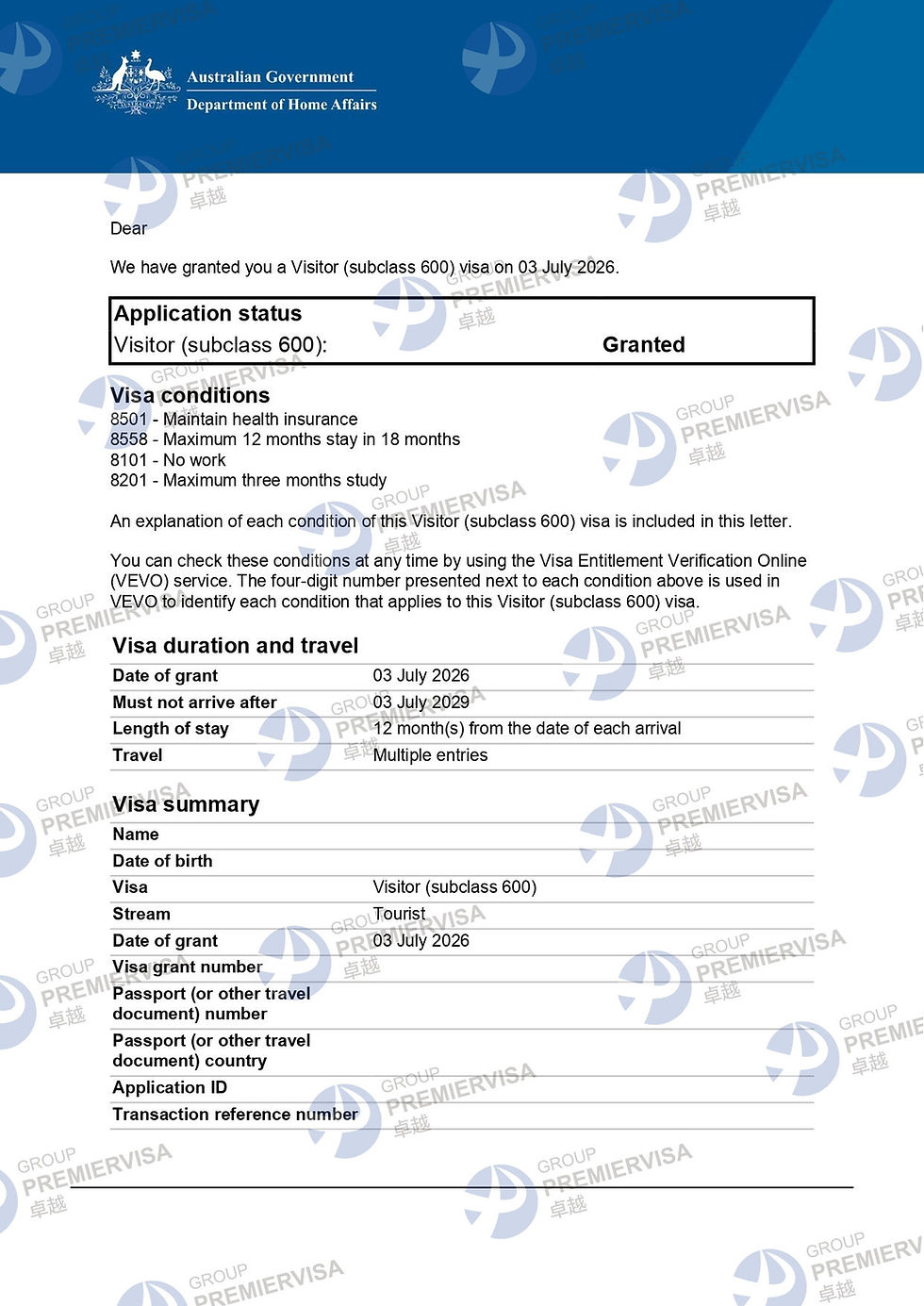
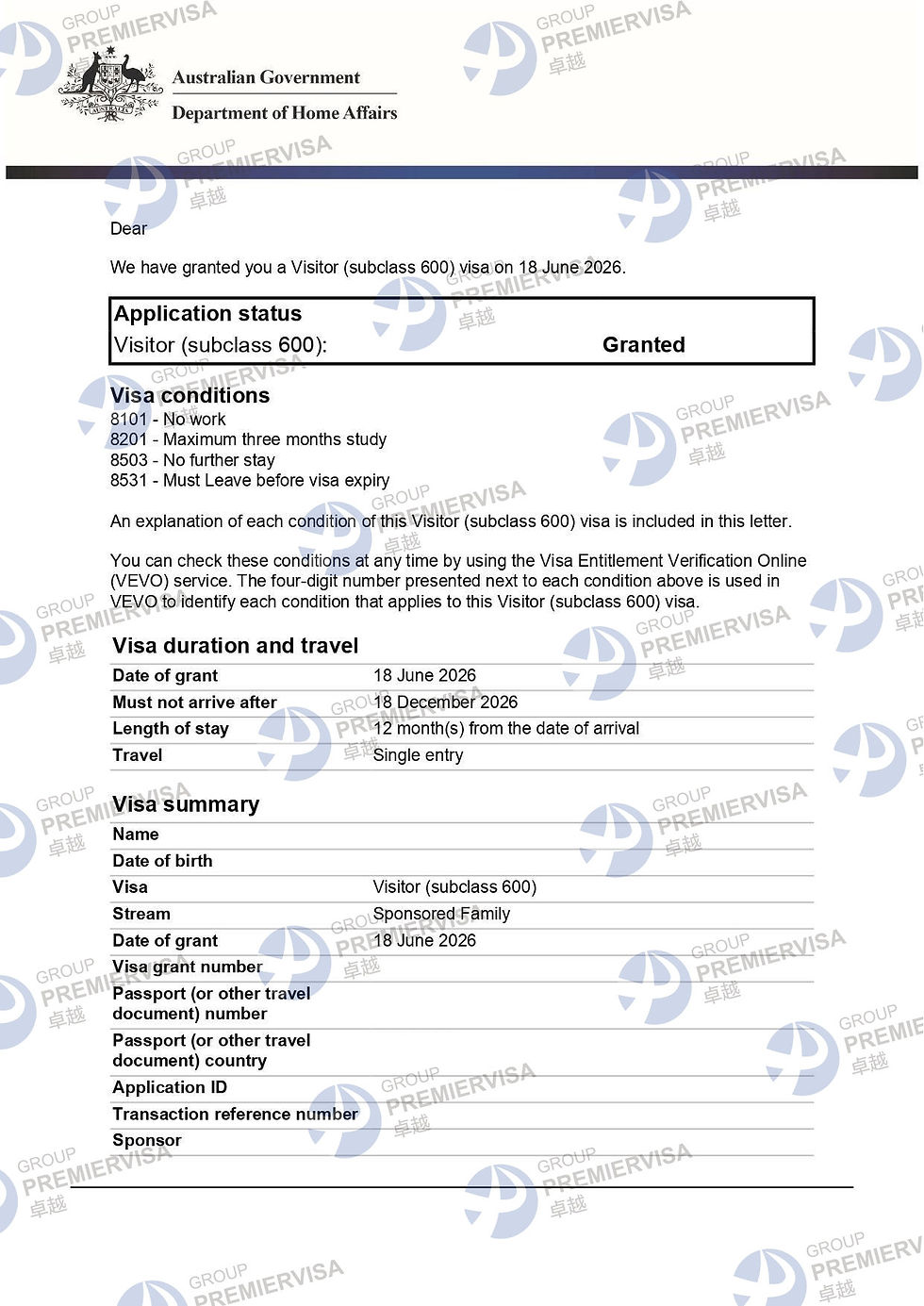
Once decisions arrive, review every person's grant separately. A family spreadsheet can track that review, but it cannot replace the grant notice or the current record of an individual's visa conditions.
Questions families ask before paying for a document review
Is a consent form the same as an invitation letter?
No. An invitation describes the proposed visit or host arrangements. Consent concerns someone with parental responsibility allowing the child's visa grant. Prepare the relevant document for its actual purpose.
Can we use one bank statement for the whole family?
A shared funding source should be explained consistently, including who owns the money and which travellers' costs it will cover. That is a document organisation point, not a promise that one statement will satisfy every application. Review the requested evidence in each file.
Does every family need Form 1257?
No. Read the circumstances described in the form. It is not a general form required merely because a traveller is a child. [S3]
What should we send for an initial consultation?
Send the traveller list, passport nationalities, proposed dates, who will accompany each child, a summary of parental responsibility, and any previous visa decision requiring attention. For the first enquiry, avoid sending full bank statements or a child's complete identity documents through a public comment box.
PremierVisa Group can help organise the family's document questions and identify matters that need further immigration or legal review. Start with the actual travel and care arrangements: that is more useful than asking for a generic “family visa package”.
Official sources
Programme information and consultation
Ask PremierVisa Group to review your family visitor document plan

Comments